


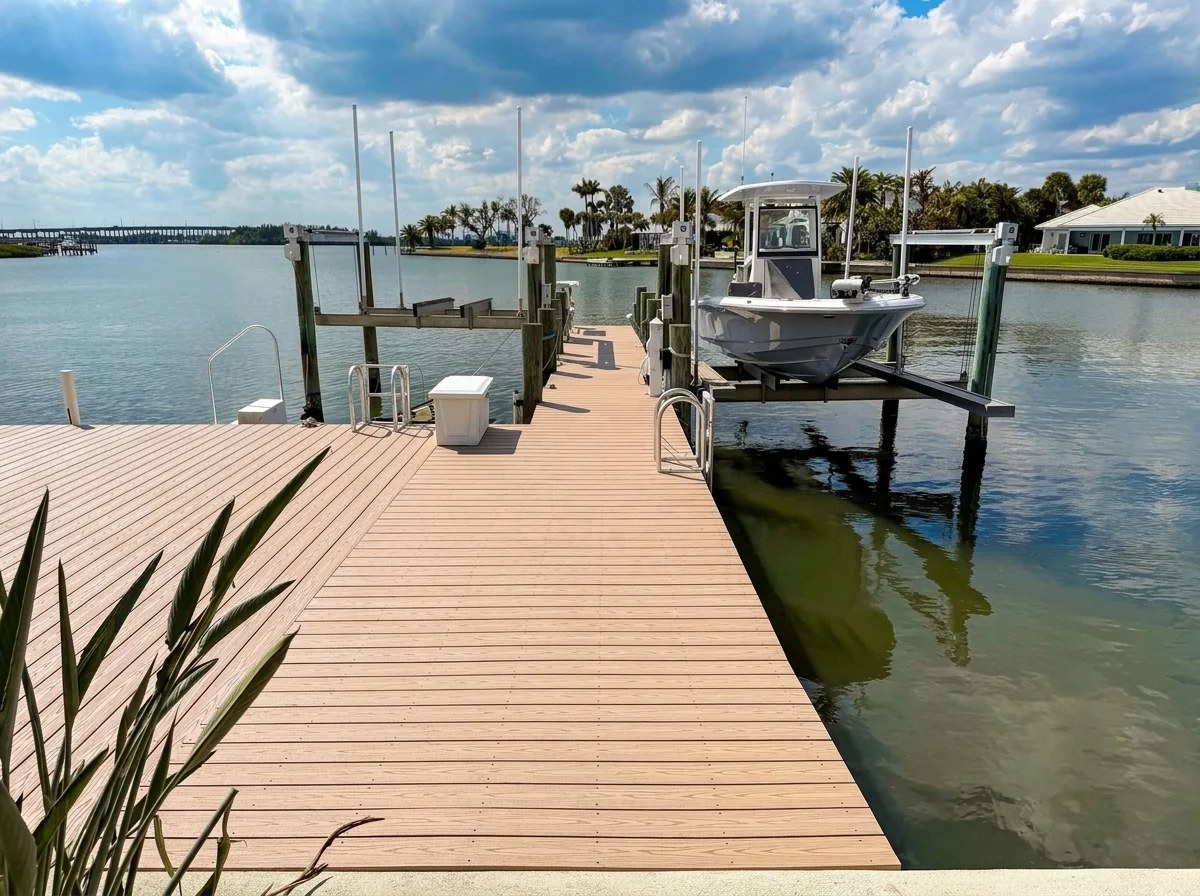
Short answer: The Florida Fish and Wildlife Conservation Commission (FWC) says the safest first step is to trailer the boat, if you can, and move it well away from tidal water. If the boat has to stay at a dock, marina berth, mooring or anchor, FWC’s guidance is to add extra lines or anchors, protect those lines from chafe, put out fenders, take loose gear and life jackets off the vessel and never stay on board during the storm. On a Brevard or Treasure Coast waterfront, a sound boat lift, through-bolted cleats, a dock box fastened to the deck, lighting and a ladder can support that plan. Dockside Builders sells and installs these accessories, and you can include them in a new dock or add them later as an upgrade.
Why prepare a Florida dock for hurricane season?
FWC gathers storm-prep advice so boat owners can stay safe and reduce damage before, during and after a hurricane or tropical storm. Those storms can bring heavy rain, waves, high water, winds of more than 100 mph and tornadoes. A canal slip in Brevard County or Indian River County can take a beating even when the center of the storm stays offshore, and a dock that is already fitted for extra lines, fenders and secured storage is easier to prep on short notice.
Since 1980, Dockside Builders has built and fitted docks, lifts and seawalls for this setting. We sell and install the accessories below as part of a new build or as upgrades. This post follows FWC’s boating-safety guidance and links it to the dock equipment we install. For a fishing and outdoors setup instead, see what to add for an ultimate outdoorsman and fishing setup.
Should I move the boat or leave it at the dock?
FWC’s first recommendation is to move the vessel if you can. If the boat can go on a trailer, take it out of the water and relocate it as far from tidal waters as you reasonably can. That advice also covers kayaks and other small recreational craft. FWC points boaters to its Florida Boat Ramp Finder to locate a ramp.
A boat lift is still a useful part of a Florida dock when the boat stays on the property. Getting the hull out of everyday salt water and wake is good practice and Dockside Builders sells and installs lifts from our partner Hurricane Marine Products on a new dock or as an upgrade. We size the lift to the boat and the piling layout rather than guessing at capacity. If you are comparing lift styles, see our guide on how to choose a boat lift.
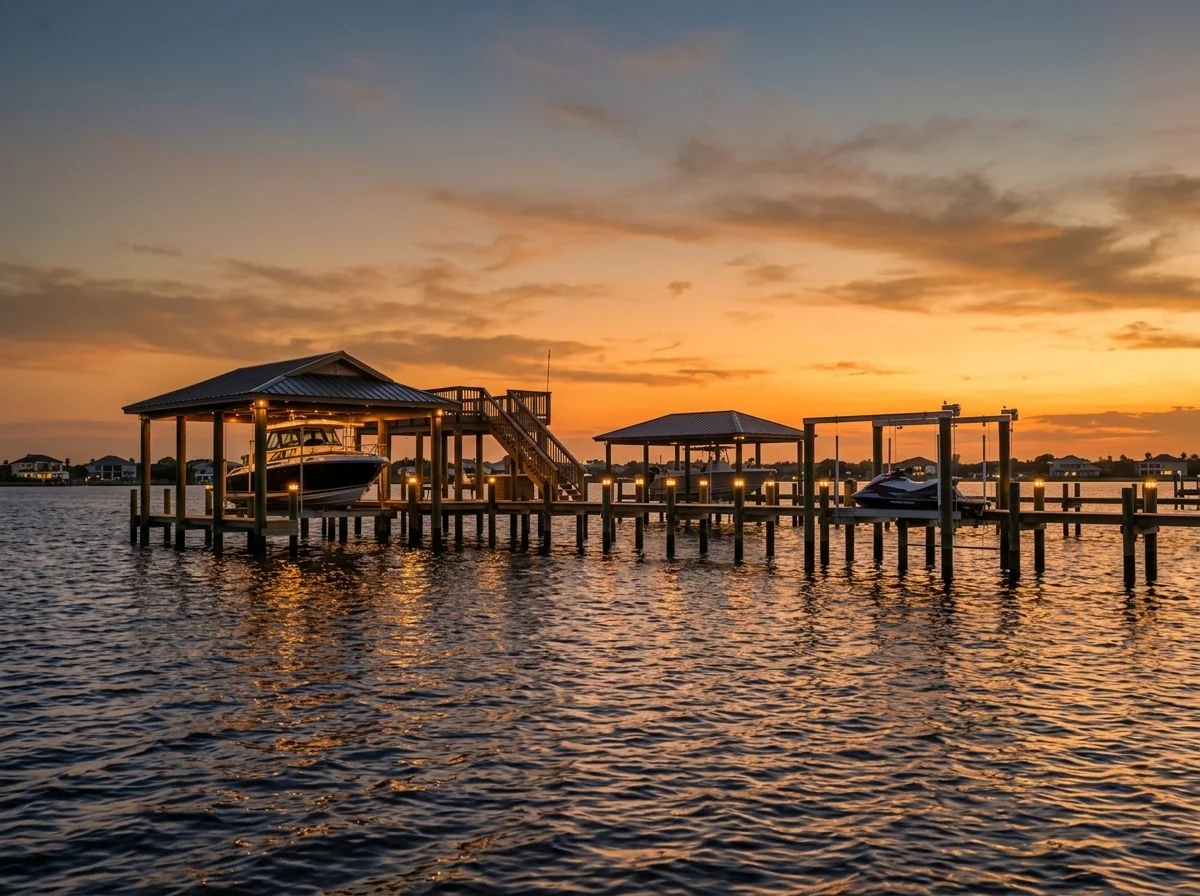
A lift is not a substitute for FWC’s advice to trailer the boat inland when that is an option. If the boat will remain on the lift, raise it only if the lift, pilings and power are sound, and do not run a motor or outlets that have been wet. After a flood or a direct hit, have the lift inspected before you use it again. A cover or canopy can protect the boat in ordinary weather; FWC advises removing canvas from a boat that will ride out a storm at anchor, so plan covers so they can be secured or taken down when a major storm is coming. Dockside sells and installs lifts, covers and boat houses as part of a new build or as an upgrade.
How should I secure the boat if it has to stay?
When the vessel cannot be moved, FWC’s advice depends on where it will sit:
- At a dock or marina berth: Use a second set of lines, add spring lines that run forward and aft so the boat cannot surge along the dock and make those lines off higher on the pilings so they can still hold if the water rises.
- At anchor: Move to the most sheltered water you can reach, set more than one anchor and use at least a 10:1 scope, as FWC specifies. Take off canvas if you can, and take down or secure any sails.
- On a mooring: Confirm the mooring is built for the load of your boat, inspect the chain and swivels at the buoy and add a second mooring pennant.
FWC also says to protect lines from chafe where they run through chocks, using materials such as tape, rags, hose or leather and to put out fenders, fender boards or even tires so the hull does not grind against a pier, piling or a neighboring boat. Charge the batteries so automatic bilge pumps can run through the storm, consider a backup battery and switch off other electrical loads.
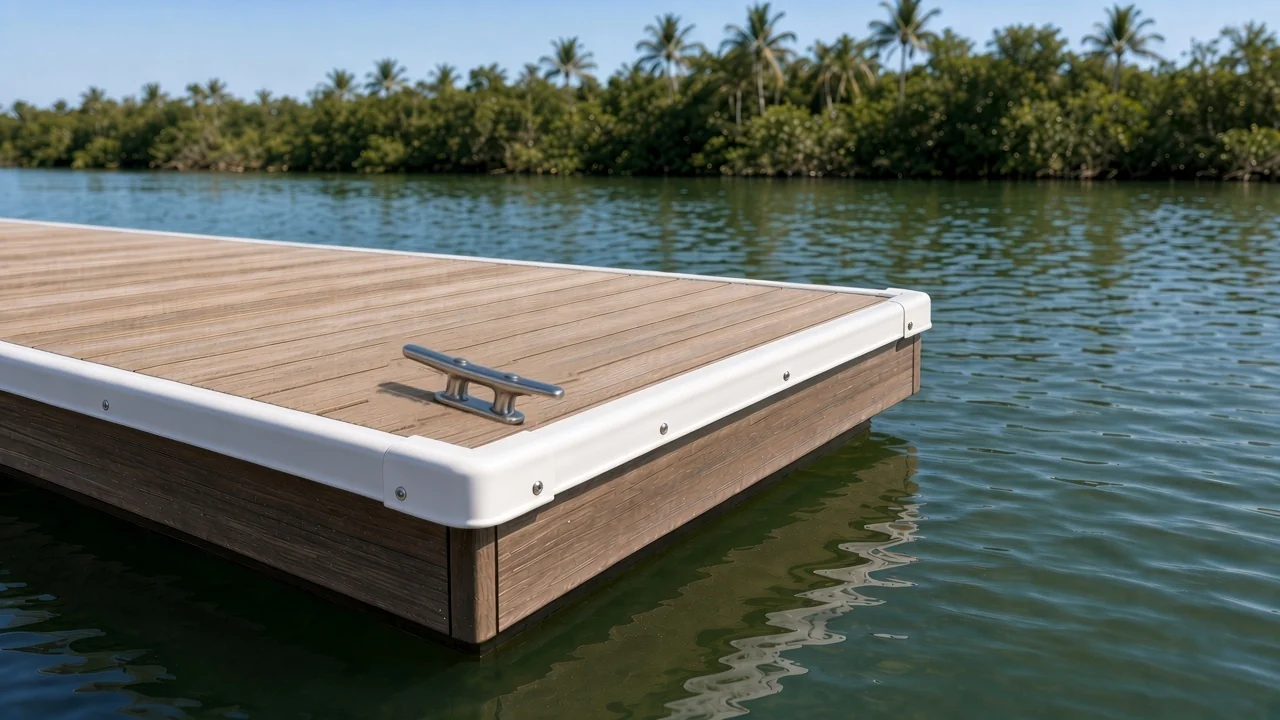
Through-bolted marine-grade cleats, extra dock lines, tie-downs and, where the site calls for them, additional anchors make this kind of securing possible. Check lines for chafe and sun damage during the season, not only when a watch is posted. Dockside sells and installs cleats, hardware, extra anchors and tie-downs for new docks and as upgrades.
Do I need fenders and piling bumpers?
Yes, if a boat may stay in or near the slip. That matches FWC’s recommendation to install fenders or similar protection so the hull does not rub the dock, pilings or other boats when wind and surge shove it around. Dockside sells and installs fenders and piling bumpers on new builds and as upgrades.
What should I take off the boat, and how should a dock box be fastened?
FWC tells boaters to remove life jackets, life rings, emergency beacons (EPIRBs) and other loose items from the vessel and store them in a safe place indoors—not on the boat. Follow that guidance when a storm is coming. A marine dock box still belongs on the dock if it is bolted through the deck into solid framing, because an unsecured box can blow or wash away. Use it for everyday storage of lines and gear and before a hurricane, take life jackets and loose items indoors as FWC advises.
Dockside sells and installs dock boxes that are attached to the dock, including on existing slips, and we can place the box so it does not block lift controls or a ladder.

How do lighting and a ladder help?
A marine-grade ladder is a way out of the water if someone goes in before or after a storm. Mount it where a person in the water can reach it without crossing under a lift beam and use a through-bolted, saltwater-ready ladder. Low, marine-rated lights on pilings, steps and the walkway make the dock safer to use while you are preparing or inspecting, including at night. Put fixtures on a breaker you can reach from shore. FWC also says to shut off electrical devices that are not needed to run bilge pumps, and to leave wet systems alone until they have been checked. Dockside sells and installs lighting and boarding ladders on new docks and as upgrades.
What should I do before, during and after a hurricane?
Start with the weather. FWC points boaters to the National Hurricane Center for storm tracking and to Florida law on mandatory marina evacuations (Chapter 327.59, Florida Statutes). If an evacuation order applies to your marina or area, follow it. There is no advantage in waiting until the last afternoon to pull a trailerable boat or to add lines.
A practical pre-storm list, consistent with FWC, looks like this:
- Trailer the boat, kayak or other small craft and move them as far from tidal water as you can, if that is an option
- If the boat must stay, add a second set of lines, spring lines and chafe gear and make lines off high on the pilings
- Set out fenders or piling protection
- If the boat will be at anchor, use multiple anchors and at least a 10:1 scope and take off canvas and unsecured sails
- Take life jackets, life rings, emergency beacons and loose items off the boat and store them indoors
- Charge batteries for automatic bilge pumps, consider a backup battery and switch off other electrical loads
- Close a bolted dock box and take in chairs, coolers, hoses, unsecured covers and anything else that can fly or float away
- Leave the dock once conditions are unsafe and do not stay on the boat
FWC is direct about safety during the storm: do not go out in rough conditions, and do not ride out a hurricane or tropical storm on a docked, moored or anchored vessel. For shelter information, FWC refers the public to FloridaDisaster.org.
After the storm, stay off a damaged dock and treat the water as hazardous. FWC warns that debris, downed pilings or trees, new shoals and missing or damaged navigation markers—some of them underwater—can make boating dangerous. Avoid flooded areas and places where first responders are working and keep to a safe speed if you must be on the water. For distress or other emergencies, call 911 or use VHF Channel 16; FWC says not to rely on social media for life-threatening reports. Report missing or damaged markers through FWC, and report a storm-damaged boat that may be lost or abandoned to local law enforcement or to the FWC Division of Law Enforcement at 888-404-3922.
If your dock or lift took on water, inspect from shore first. After the historic early-November 2026 rainfall in southern Brevard, many owners saw how lift motors, lights and outlets can flood even when the dock is still standing. Use our dock and seawall flood checklist before you walk or use the structure. Photograph the property for your own records and speak with your insurance company about next steps; we do not make claims about what a policy will cover. FWC also notes that some marinas may be eligible for Small Business Administration disaster-relief loans.
Where does Dockside Builders sell and install hurricane-season dock accessories?
Founded in 1980 and based in Sebastian, Dockside Builders serves Florida's Treasure and Space Coasts, including waterfronts in Brevard County and Indian River County. We are a licensed general contractor (GC License # CGC1540000). We sell and install lifts from our partner Hurricane Marine Products, along with extra anchors and tie-downs, dock lines and cleats, fenders and piling bumpers, bolted dock boxes, lighting and ladders. Those products can go into a new dock or be added as upgrades. Permit needs vary by property and by the work involved; once plans are approved, Dockside handles paperwork submission to the relevant local and state agencies. For the typical approval path, see Do I need a permit to build a dock in Florida? See a completed lift installation in our Satellite Beach dock, boathouse and boat lift story. After high water, use the Central Florida flood checklist or schedule a free dock inspection.
Get a free estimate
Planning a new dock or ready to add a lift, anchors, lines, a bolted dock box, fenders, lighting or a ladder to the one you already have? Dockside Builders sells and installs these hurricane-season accessories for Treasure and Space Coast waterfronts. Tell us about the boat and the property, and we will set up a time to look at the site. Call 772-664-6798, contact us or request a free estimate. You can also browse our marine construction services.
Our partners: Dockside Builders works alongside community, conservation and industry partners on Florida's Treasure and Space Coasts. Meet our partners.

